
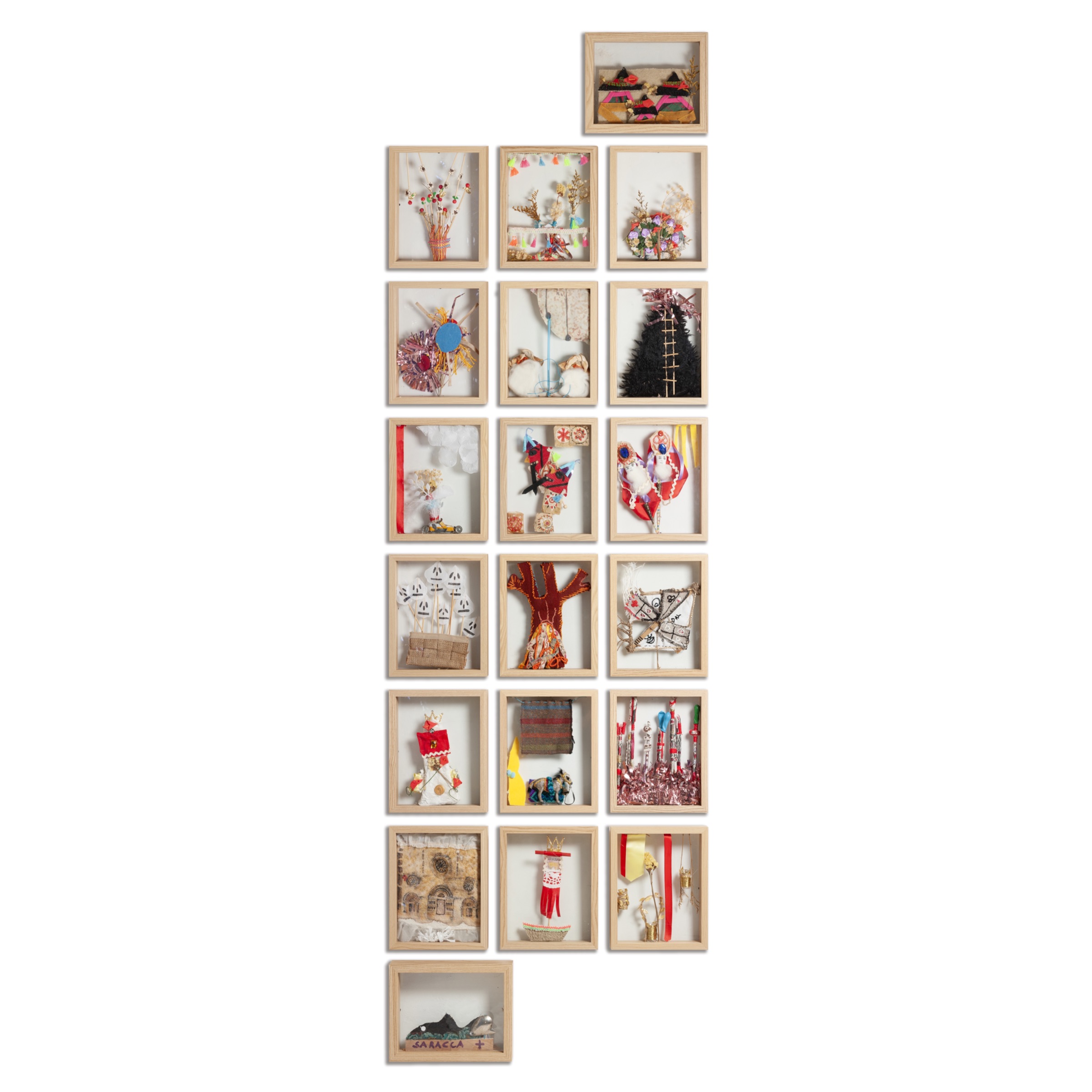
The folk festival is a form of organizing time that is distinct from the everyday flow of activities. It exists in every human society and is characterized by several elements—though not all present at once—such as repetition, sociability, play, conflict, and symbolic, religious, economic, political, bodily, musical, or transgressive dimensions.
Starting from the 1970s, with the massive entrance of consumer culture, the rural world began a profound transformation, disappearing as a cohesive way of life. However, in the same years, with the rediscovery of folk culture and local identity, folk festivals underwent a process of revitalization—though for some, commodification—within a deeply changed social and economic landscape.
No longer embedded in the agricultural calendar, these festivals transformed by adapting both to the demands of the tourist market and media, which have exalted their spectacular aspects, sometimes at the expense of their expressive dimension, and to territorial policies focused on economic, political, and image returns. New festivals have been invented to create new forms of sociability and identity.
The festive event, regardless of its antiquity or origin, proves capable of fulfilling a sociopoietic function, governed by its own ability to produce communities of meaning, language, and reference, and to establish a dialectical relationship with the practices and rhetorics of cultural heritage. It is an hortus conclusus—a space/time, a place of the soul, a magical environment where participants engage collectively in a preparatory work.
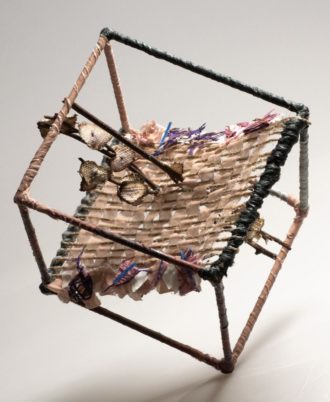
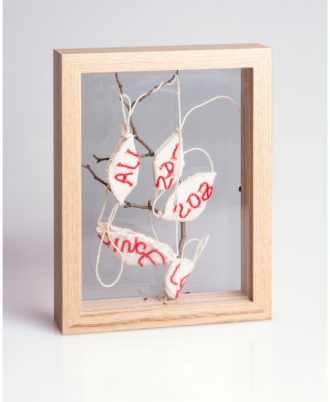
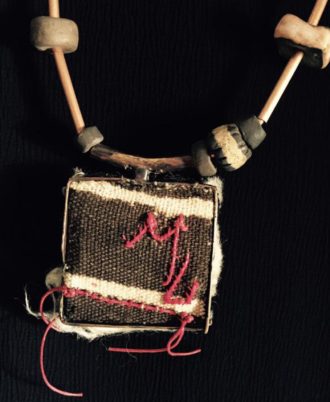
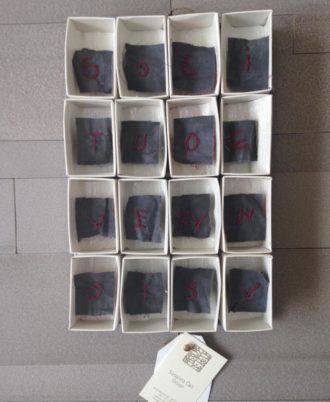
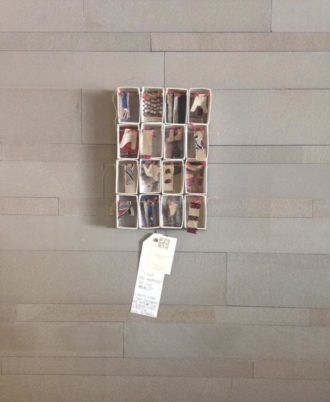
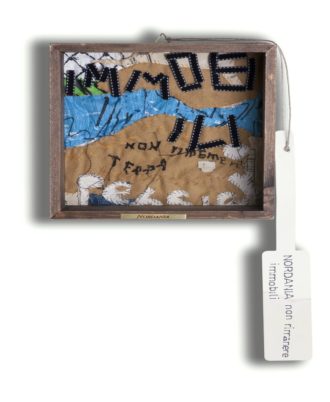
The installation, conceived from this premise, reconstructs traditional festivals in 20 wooden and glass boxes—one for each region of Italy—and ironically outlines a real Unity of Italy that, as we know, has never been fully achieved. Although different, traditional festivals share common substrata and similar cathartic manifestations from North to South, prompting reflection.
d a l l ’ a l t o e d a s x a d x d e l l a f o t o:
FESTA DI SAN MARTINO (Trentin o A l t o A di g e)
L A F E S T A D E L L E M E L E (V a l D ’ A o s t a)
L A P R O C E S SIO N E D EI M A N U O C C HI (B a s i l i c a t a)
L A B A T T A G LIA D EI FIO RI (L i g u ria)
L A F E S T A D EI F U O C HI (F r l li V e n e z i a G i u l i a)
L A N O T T E D EI C U CIB O C C A (M o l i s e)
L A F O C A R A DI N O V O LI (P u g l i a)
L A M A C C HIN A DI S A N T A R O S A (L a zio)
L A F E S T A D EI GIU D EI (Sicilia)
L A B AIO DI S A M P E Y R E (Pie m o n t e)
IS ANIMEDDAS (Sardegna)
SEGA LA VECCHIA (Umbria)
GIOCHI DI BANDIERA (Toscana)
LA VARIA DI PALMI (Calabria)
IL PALIO DEGLI ASINI (Lombardia)
LA FESTA DEI GIGLI (Campania)
LA PERDONANZA (Abruzzo)
LA FESTA DELLA SANSA (Veneto)
LA FESTA DEI GIGLI (Campania)
L‘ANTICO FUNERALE DELLA SARA C C A (E milia R o m a g n a)
LA CONTESA DEL SECCHIO(Marche)